

Every October, Breast Cancer Awareness Month gives us the opportunity to talk openly about breast health, early detection, and the importance of screening. One of the most common questions people ask during this time is: when do you get your first mammogram? It’s a simple question, but the answer depends on your age, risk factors, and guidance from your health care provider.
Let’s walk through what you need to know about mammograms, how screening works, and when it might be the right time to schedule your first one.
What Is a Mammogram?
A mammogram is an x-ray of the breast that allows radiologists to see changes in breast tissue that may not be felt during a breast self-exam or seen during a physical exam. Mammography is one of the most important screening tests for breast cancer because it can detect abnormalities at an early stage, sometimes years before symptoms appear.
There are different types of mammograms, including traditional 2D images, 3D mammography (also called tomosynthesis), and diagnostic mammograms used when more detailed imaging is needed. Some patients may also be referred for breast ultrasound or breast MRI if additional imaging is necessary.
Why Is Early Detection So Important?
Early detection of breast cancer can save lives. When breast cancer is caught at an early stage, treatment is often more effective and less invasive. Screening mammograms can identify small tumors that may not yet have caused noticeable changes. For women with dense breasts, mammography combined with other imaging techniques can be especially important since dense tissue can make it harder to see abnormalities.
The American Cancer Society and the U.S. Preventive Services Task Force (USPSTF) both emphasize that regular mammograms are a key part of preventive health care. While screening guidelines vary slightly, they all agree that mammography plays a central role in reducing deaths from breast cancer.
So, When Do You Get Your First Mammogram?
This is where things can feel confusing, because screening guidelines differ slightly among organizations. Here’s a breakdown:
- American Cancer Society (ACS):
- Women at average risk of breast cancer can start mammograms at age 40 if they choose.
- Annual mammograms are recommended beginning at age 45.
- At age 55, women can switch to every two years, though annual mammograms are still an option.
- U.S. Preventive Services Task Force (USPSTF):
- Recommends that women at average risk start mammograms at age 40 and continue every two years until age 74.
- Other guidelines:
- Some gynecologists and primary care providers may recommend starting at age 40 regardless of risk.
- If you have a family history of breast cancer or genetic concerns such as a BRCA1 or BRCA2 mutation, your doctor may recommend starting mammograms and possibly breast MRI at a younger age.
The bottom line is that the best time to schedule your first mammogram depends on your personal risk factors and conversations with your health care provider.
Understanding Your Risk Factors
Your risk of breast cancer depends on many factors. Here are some of the most common:
- Family history of breast cancer: If your mother, sister, or daughter has had breast cancer, you may need to start screening earlier.
- Genetic mutations: Carrying a BRCA1, BRCA2, or another gene mutation increases your risk.
- Breast tissue density: Having dense breasts makes mammograms harder to read and may slightly increase risk.
- Personal history: If you’ve had previous breast biopsies, breast cancer, or certain benign conditions, you may be considered higher risk.
- Age and menopause: Risk increases with age, especially after menopause.
- Other factors: Hormone replacement therapy, lifestyle choices, and radiation exposure can also affect your risk.
If you’re considered high risk, your health care provider may recommend earlier screening and the use of additional tools like breast MRI.
What to Expect at Your First Mammogram
Scheduling your first mammogram can feel intimidating, but knowing what to expect can ease nerves. Here’s what typically happens:
- Preparation: On the day of your appointment, avoid wearing deodorant, lotions, or powders under your arms or on your chest, since these can show up on the x-ray and cause false positives.
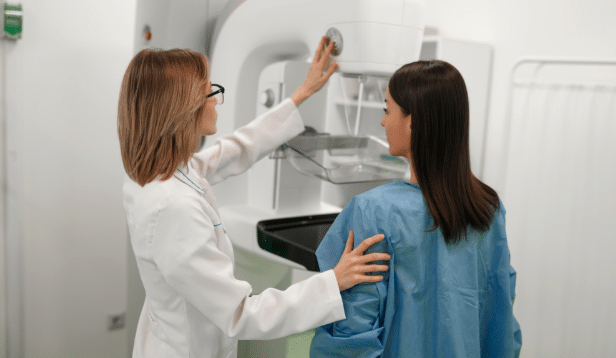
- The exam itself: A technologist positions your breast on a flat surface and gently compresses it with a plate to spread the tissue evenly. While this may feel uncomfortable, the compression only lasts a few seconds.
- Images captured: Multiple images are taken from different angles, and if you’re having a 3D mammogram, thin slices of your breast tissue will be captured for more detailed imaging.
- Radiologist review: A radiologist interprets the images, looking for signs of cancer or other breast health concerns.
- Results and follow-up: Your health care provider will share the results and discuss any need for further imaging or tests, such as a diagnostic mammogram, breast ultrasound, or biopsy if something suspicious is found.
Common Concerns and Questions
What about false positives?
Sometimes mammograms detect something that turns out not to be cancer. While false positives can be stressful, they are a natural part of the process. Follow-up imaging helps clarify results and ensures nothing is missed.
What if I’m nervous about radiation?
Mammograms use a very low dose of radiation, and the benefits of early detection far outweigh the risks. In fact, mammography has been studied extensively and remains one of the safest and most effective screening tests for breast cancer.
Can men need mammograms too?
Yes, men with a higher risk or strong family history of breast cancer may be referred for mammography if needed.
The Role of Regular Mammograms
Your first mammogram is just the beginning. Annual screening or regular mammograms play a vital role in maintaining good health. Even if your first screening is normal, it’s important to keep up with mammogram guidelines as you age.
Breast health is a lifelong journey, and your needs may change over time. Talking openly with your gynecologist, primary care provider, or another member of your health care team ensures your screening plan fits your unique situation.
Tips for a Smooth Mammogram Experience
- Schedule your mammogram a week after your period, when breast tissue is less tender.
- Wear a two-piece outfit so you only need to remove your top.
- Bring any past imaging records if you’ve had breast imaging before.
- Communicate with your technologist if you feel pain or discomfort.
- Remember that mammograms typically only take about 20 minutes.
Breast Cancer Awareness and Beyond
Breast Cancer Awareness Month is about more than wearing pink. It’s about education, empowerment, and encouraging everyone to take steps toward prevention and early detection of breast cancer.
By learning about screening guidelines, understanding your risk factors, and talking with your health care provider, you’re taking an important step toward protecting your breast health.
Wrapping It Up
So, when do you get your first mammogram? For many people, that answer is around age 40, but if you’re at a higher risk due to family history of breast cancer, genetic mutation, or other risk factors, you may need to start mammograms sooner. The most important step is having a conversation with your provider about the right plan for you.
This Breast Cancer Awareness Month, prioritize your health by scheduling your first mammogram or staying on track with your regular mammograms. Early detection saves lives, and your health is worth it.
If you’d like to schedule your first mammogram or learn more about breast cancer screening in Utah, contact Premier Family Medical today. Our compassionate providers are here to guide you through every step of your breast health journey.